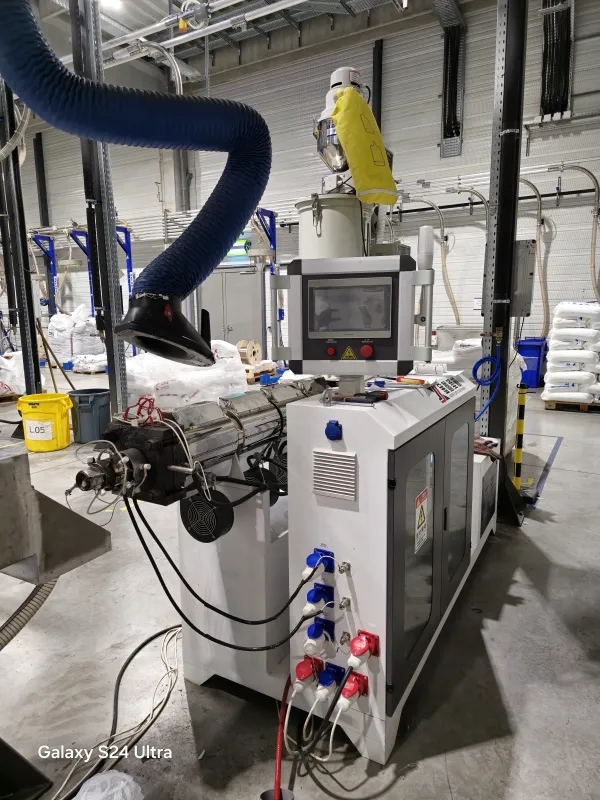

Why Resin Drying Matters in Plastic Extrusion
A Step That Gets Overlooked — Until It Ruins an Entire Production Run
Resin drying in plastic extrusion is one of the most overlooked causes of product failure. When bubbles, splay marks, or unexplained brittleness appear, the first instinct is usually to check the extruder. In many cases, operators spend hours troubleshooting the machine before arriving at a frustrating conclusion: the problem was never in the extruder. It was in the material before it ever entered the barrel.

When plastic pellets carry excess moisture into a high-temperature extruder, that moisture becomes steam — and steam trapped inside a molten polymer creates defects that no amount of parameter adjustment can fix. For hygroscopic plastics like PC, PMMA, ABS, and PA, resin drying before plastic extrusion is not an optional preparation step. It is a mandatory condition for producing acceptable products.
This does not mean every plastic requires drying. Non-hygroscopic materials like PE, PP, and PVC typically do not need dehumidifying treatment. The decision to dry — and how to dry — depends entirely on the material, the storage conditions, and the product requirements. This article explains where moisture comes from, how it damages extruded products, and what drying plastic before extrusion actually requires to be effective.
Many of the materials discussed in this article — PC, PMMA, ABS, PA, PE, PP — are covered in more detail in Common Plastics Used in Extrusion..
Two Ways Plastics Hold Water — and Why It Changes Everything About Drying
Not all plastics behave the same when exposed to humidity. The critical question is not whether moisture is present — it almost always is — but where the moisture sits: on the surface of the pellet, or trapped inside its molecular structure.

Non-Hygroscopic Plastics — Surface Moisture Only
Materials like PE, PP, and PVC do not absorb moisture into their molecular structure. Any moisture they carry is on the pellet surface — the result of condensation, humidity in storage, or temperature changes during transport.
This surface moisture can be removed with a standard hot air hopper dryer. The heated air evaporates the water from the pellet surface and carries it away. The process is relatively straightforward, and these materials are generally forgiving if drying conditions are not perfectly optimized. In many cases, proper storage and handling alone can keep surface moisture at manageable levels.
Hygroscopic Plastics — Moisture Locked Inside
Materials like PC, PMMA, ABS, PA (nylon), PET, and TPU behave very differently. These polymers actively absorb moisture from the surrounding air. Water molecules migrate into the spaces between polymer chains and become trapped — like water absorbed into a sponge, not just sitting on its surface.
A hot air hopper dryer cannot effectively remove internal moisture from hygroscopic plastics. Hot air can evaporate surface water, but the moisture locked inside the pellet requires a fundamentally different approach.
A dehumidifying dryer (also called a desiccant dryer) circulates air with an extremely low dew point — typically below -30°C (-22°F). This dry air creates a strong moisture gradient that forces water molecules to migrate from inside the pellet to the surface, where they can then be carried away. Without this low dew point, the “drying” air itself contains too much moisture to pull anything out of the pellet interior.
This is not a minor equipment preference — it is a fundamental process requirement. Using a hot air dryer on a hygroscopic material may appear to be working, but the internal moisture remains largely untouched. The pellets go into the extruder looking dry but carrying enough water to cause serious defects.
One additional factor matters: storage conditions. Even materials that arrived properly sealed can absorb significant moisture if stored in a humid warehouse or left in an opened bag for days. A material that is hygroscopic by nature but was properly packaged may not need extended drying — while the same material stored carelessly may require maximum drying time. The decision is never just about material type alone.
Determining whether your material is hygroscopic or non-hygroscopic — and assessing its actual storage history — is the first decision point when configuring a drying system. If you are not yet familiar with how these materials differ in real extrusion applications, Common Plastics Used in Extrusion provides a practical material map covering PVC, PE, PP, ABS, PC, PMMA, TPU, and PA.
For additional background on how different polymers interact with moisture, Plastics Technology’s Understanding Moisture Content in Resin offers a detailed breakdown of hygroscopic and non-hygroscopic material behavior.
What Happens When Moisture Enters a High-Temperature Extruder
Moisture in plastic pellets that is not removed before processing undergoes a rapid and destructive transformation once the material enters the extruder barrel, where temperatures can exceed 200°C (392°F). The damage occurs through two distinct pathways, and both can happen simultaneously.

The Visible Path — Surface Defects
Water trapped in the pellets vaporizes almost instantly at extruder temperatures. The expanding steam creates gas pockets that become trapped in the molten polymer. As the melt is pushed through the die and cooled, these gas pockets produce a range of visible defects:
- Bubbles and voids — air pockets within the product wall or cross-section
- Splay marks (silver streaks) — characteristic streaky, silver-colored patterns on the product surface caused by gas escaping through the melt
- Surface pitting and roughness — small craters or uneven textures where gas has disrupted the melt flow
For standard opaque products, some of these defects may be tolerable or less immediately obvious. But the situation changes drastically with transparent materials.
From real production experience with PC and PMMA: the same level of insufficient drying that might produce a minor, barely noticeable bubble in a PE pipe will create clearly visible splay marks and haze in a transparent PC or PMMA profile. Transparent products have no color to mask defects — every moisture trace, every micro-bubble, every flow disruption is immediately visible to the naked eye. This is why drying specifications for transparent extrusion products are significantly stricter, and why moisture-related rejects in this category often mean scrapping entire production runs.
The Invisible Path — Irreversible Performance Loss
The second type of damage is more insidious because it may not show up visually. At high processing temperatures, water molecules react with certain polymer chains in a process called hydrolysis. This reaction breaks the molecular chains apart, reducing the polymer’s molecular weight.
The consequences are real and measurable:
- Increased brittleness — the material loses its ability to absorb impact
- Reduced tensile and impact strength — mechanical properties degrade significantly
- Compromised long-term durability — the product may pass initial visual inspection but fail under real-world stress
PC, PA, and PET are particularly susceptible to hydrolytic degradation. The critical point: hydrolysis damage is irreversible. Once the molecular chains are broken, they cannot be reconnected. No downstream process adjustment — lowering the melt temperature, slowing the screw speed, changing the die — can undo the damage. The material has been permanently weakened at the molecular level.
Moisture in the extruder causes two types of harm: defects you can see on the surface, and performance loss you cannot see until the product fails.
Proper Drying Is Not Just “Heating the Pellets” — Four Parameters Must Work Together
When it comes to plastic pellet drying, one of the most common misconceptions is that it simply means “getting the material hot enough.” In reality, effective resin drying is the result of four parameters working together. If any one of them is inadequate, the drying process can fail — even if the other three are correct.

Drying Temperature
Every material has an optimal drying temperature window. Too low, and water molecules inside the pellet do not gain enough energy to migrate to the surface — the drying process stalls. Too high, and the pellets can begin to soften, stick together, oxidize, or discolor.
The correct temperature ensures that moisture migration is active without damaging the material. This window varies significantly between materials, which is why relying on a single “default” temperature setting for all resins is a reliable way to create problems.
Drying Time
Water molecules inside a hygroscopic pellet do not reach the surface instantly. They must diffuse outward from the interior — a process that takes time, even at the correct temperature.
One of the most frequent operator errors is topping off the hopper with fresh, undried pellets shortly before production. These newly added pellets have not had sufficient residence time in the dryer. They enter the extruder with their original moisture content intact, while the operator believes the material has been properly dried. The result is defective product from material that was technically “in” the dryer but never actually dried.
Airflow
Heated or dehumidified air must flow continuously through the pellet bed in sufficient volume. The air delivers heat to the pellets and carries away the moisture that has migrated to the pellet surface.
If airflow is insufficient, moisture evaporating from the pellets accumulates in the surrounding air, reducing the drying driving force. The material essentially sits in its own humid microenvironment even though the dryer is running.
Dew Point — The Most Overlooked Parameter
For hygroscopic materials, dew point is the single most important drying parameter — and the one most frequently ignored.
Dew point measures how much moisture the drying air itself contains. Normal ambient air has a dew point somewhere between +10°C and +20°C. For non-hygroscopic materials where you only need to remove surface water, this is acceptable. But for hygroscopic plastics, ambient air is far too moist to extract internal water.
Effective dehumidifying dryers deliver air with a dew point of -30°C (-22°F) or lower. Only air this dry can create a strong enough moisture gradient to pull water out of the pellet interior. If the dew point drifts upward — due to desiccant bed saturation, maintenance issues, or simply using the wrong dryer type — the air loses its ability to dry hygroscopic material, regardless of how hot it is or how long the material sits in the hopper.
Of the four parameters, temperature and time tend to get the most attention. Airflow and dew point tend to get the least — and they are often the real reason drying fails.
For a deeper technical reference on drying parameters and equipment selection, Novatec’s Resin Drying Basics provides additional detail on temperature profiles, airflow calculations, and dew point management.
The Trap After Drying — Moisture Regain
For strongly hygroscopic materials like PC, PMMA, and PA, successfully drying the pellets is only half the job. What happens between the dryer and the extruder can undo hours of careful drying in minutes.
Why Freshly Dried Pellets Re-Absorb Moisture Quickly
A properly dried hygroscopic pellet has a very low internal moisture content — significantly lower than the equilibrium level for the surrounding workshop air. This creates a steep moisture gradient: the dry pellet is essentially “thirsty,” and it begins absorbing moisture from the ambient air immediately upon exposure.
In practical terms, freshly dried PC or PMMA pellets exposed to normal workshop conditions can reabsorb enough moisture to cause processing defects within 30 to 60 minutes. Hours of drying work can be negated by a short period of unprotected exposure.
Best Practice — Minimize Exposure Time
The most effective approach is to mount the dryer directly on top of the extruder feed throat, so dried pellets drop straight from the dryer into the screw with minimal air exposure. This is the shortest possible path and the lowest risk for moisture regain.
When a centralized drying system is used and pellets must be conveyed to the extruder, the conveying system itself becomes a critical variable. Using ordinary compressed air to convey dried hygroscopic material is a common and expensive mistake. Standard compressed air contains far more moisture than the dried pellets can tolerate. The solution is to use dehumidified air conveying lines — maintaining the low-moisture environment from dryer outlet all the way to the extruder inlet.
A troubleshooting insight: when the drying program looks correct on paper — correct temperature, adequate time, proper dew point — but the product still shows bubbles or splay, the two most common hidden causes are: (1) freshly added pellets that did not have enough residence time in the hopper, and (2) the conveying system using standard compressed air that re-moisturized the material during transport. These two issues are more common than actual dryer malfunction, and they are easy to overlook because the dryer itself appears to be functioning normally.
Drying is a process that must be maintained until the last moment before the material enters the extruder — it is not a step that can be completed in advance and set aside.
Conclusion — Treat Drying as the First Quality Checkpoint in Your Production Line
Drying failures are a silent source of scrap. They do not trigger machine alarms. They do not flash error codes on the control panel. The extruder runs normally, the line speed looks stable, and the downstream equipment operates without complaint. But the products coming off the line carry defects — visible or invisible — that trace back to moisture that should have been removed before the material ever reached the barrel.
For non-hygroscopic materials like PE, PP, and PVC, a properly maintained hot air hopper dryer handles the job — or in many cases, proper storage alone is sufficient. For hygroscopic materials like PC, PMMA, ABS, PA, and PET, a dehumidifying dryer with verified dew point performance is not optional equipment — it is the baseline requirement for acceptable production.
From Jinxin’s perspective as an extrusion line manufacturer: drying-related production issues typically surface during commissioning and trial runs — not during individual equipment acceptance testing. The dryer may pass its standalone performance check, but problems emerge when the full line runs with real material under real workshop conditions. This is why, when configuring extrusion lines for hygroscopic materials, we treat the drying system’s specification and installation position as part of the overall line solution — not as a component for the customer to source separately. Getting the drying system right from the start prevents a category of problems that are frustrating to diagnose and expensive to fix after the line is already installed.
If you want to continue learning about how the extrusion process works — from raw material to finished product — the next step is: What Is Plastic Extrusion? →
If you are already sourcing an extrusion line and need help evaluating the right drying configuration for your material, contact our engineering team with your material type, product requirements, and any defects you are experiencing.
Have Technical Questions?
Our engineering team is ready to help with your extrusion process or machine configuration.
Jason Shen
Jason is the founder of Jinxin Extruder and a veteran engineer with over 20 years of hands-on experience in plastic machinery.
Starting his career on the shop floor, he mastered every technical detail—from electrical wiring to complex troubleshooting.
Today, he personally oversees final inspections, ensuring every machine is built with deep technical expertise and field-tested reliability.
Further Reading
Extrusion Line Quotation: What Is Included and What to Check Before You Buy
Comparing extrusion line quotations? Use this scope of supply checklist to see what is included, what is typically excluded, and…Extrusion Screen Changer & Melt Filtration: How to Reduce Contamination and Pressure Fluctuation
A practical guide to screen changers in plastic extrusion — how melt filtration controls contamination, why screen changes cause pressure…