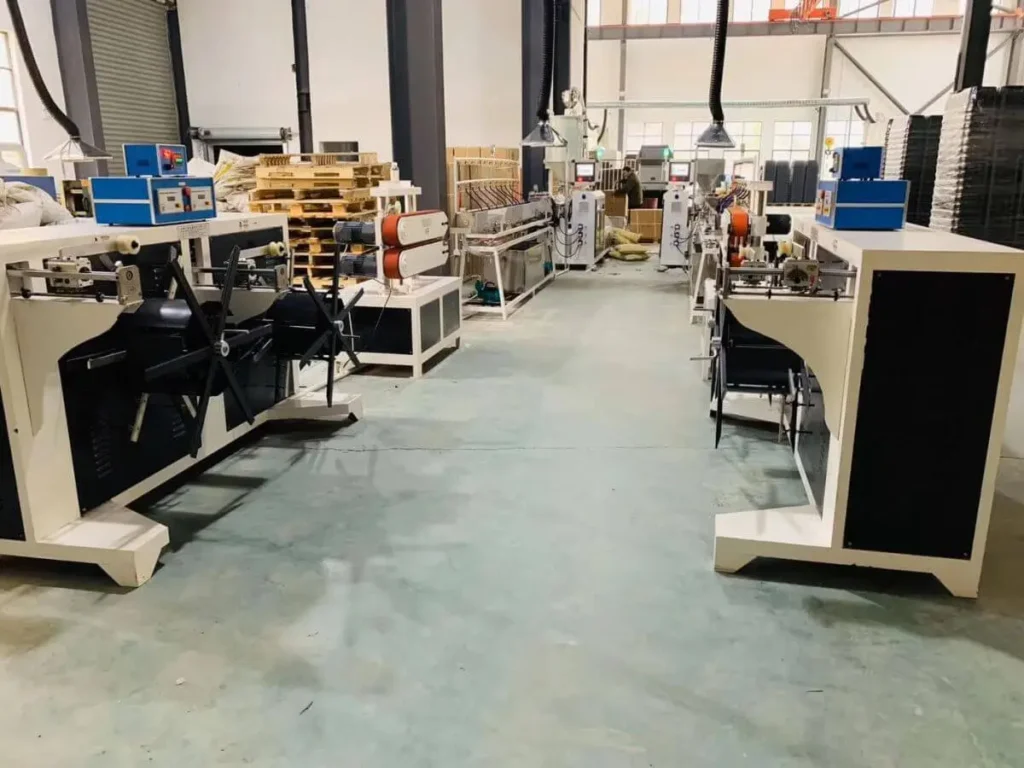
Dip Tube Extrusion Line for Cosmetic and Aerosol Packaging
LDPE/PP dip tube extrusion line for lotion pump, perfume pump, aerosol valve and trigger sprayer tubes, configured around your tube size, material, OD control, cut length and collection method.
LDPE/PP dip tube extrusion line for lotion pump, perfume pump, aerosol valve and trigger sprayer tubes, configured for stable OD control, uniform wall thickness and clean servo cutting.
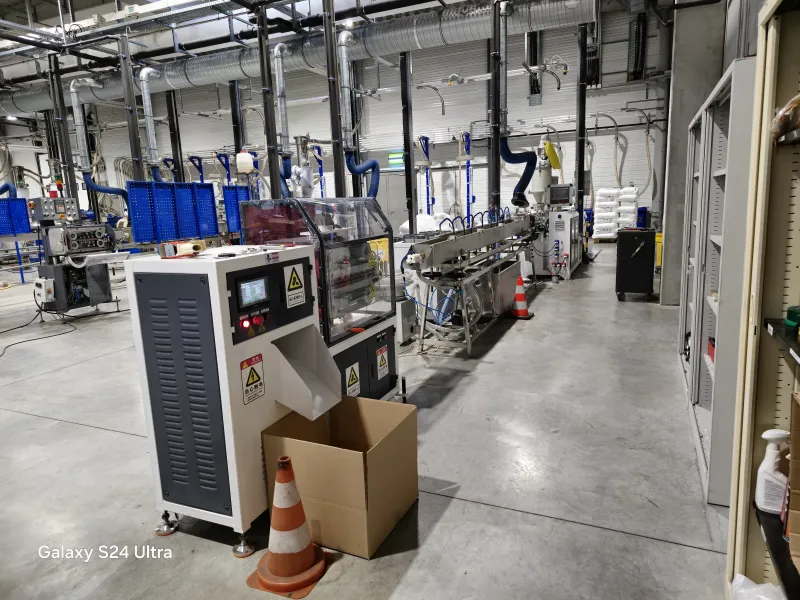
Dip Tube Extrusion Line Modules
Jinxin configures each dip tube extrusion line for lotion pump, perfume pump and aerosol valve tube production, with LDPE or PP processing, OD control, servo cutting and collection modules matched to the buyer’s product requirements.
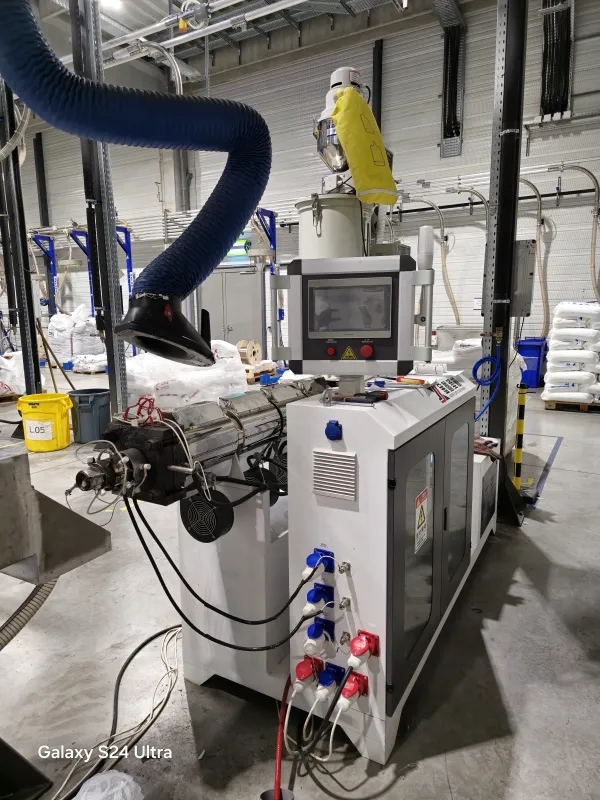
Extrusion
Precision Single Screw Extruder
- Motor: Siemens Beide inverter-duty motor.
- Drive: Direct coupling design without belt transmission.
- Inverter: ABB ACS580 for stable speed control.
- Control: WECON PLC and touchscreen interface.
- Screw: Nitrided steel screw configured for LDPE or PP melt stability.
- Heating: FOTEK SSR control for multi-zone temperature management.

Tooling
Die Head and Tooling Set
- Material: High-quality die steel with polished flow channels.
- Design: Tooling designed for thin-wall dip tube forming.
- Stability: Flow path and die matching help reduce tube stress and improve straightness.
- Size support: Different tube sizes are handled by matched tooling sets.

Calibration
Vacuum Cooling Water Tank
- Construction: SUS304 stainless steel tank for corrosion resistance.
- Alignment: 3-axis adjustment for centering the tube path with the die and haul-off.
- Vacuum: Water-pump vacuum system supports stable negative pressure.
- Tube stability: Integrated pressure rollers help keep the tube immersed and stable.
- OD control: Vacuum calibration helps maintain roundness and ±0.05 mm OD stability.

Drying
Integrated Air-Knife Channel
- Design: 360° circular air-wiping channel.
- Function: Removes surface water before the tube enters the haul-off unit.
- Process benefit: Reduces traction slip caused by moisture on the tube surface.
- Cutting stability: Drier tube surface helps improve cut length consistency.
Traction
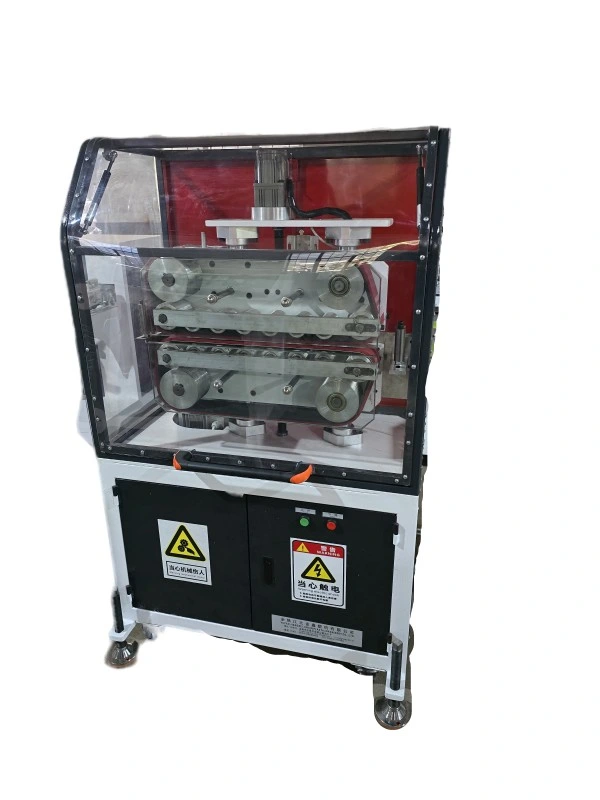
Precision Haul-Off Options
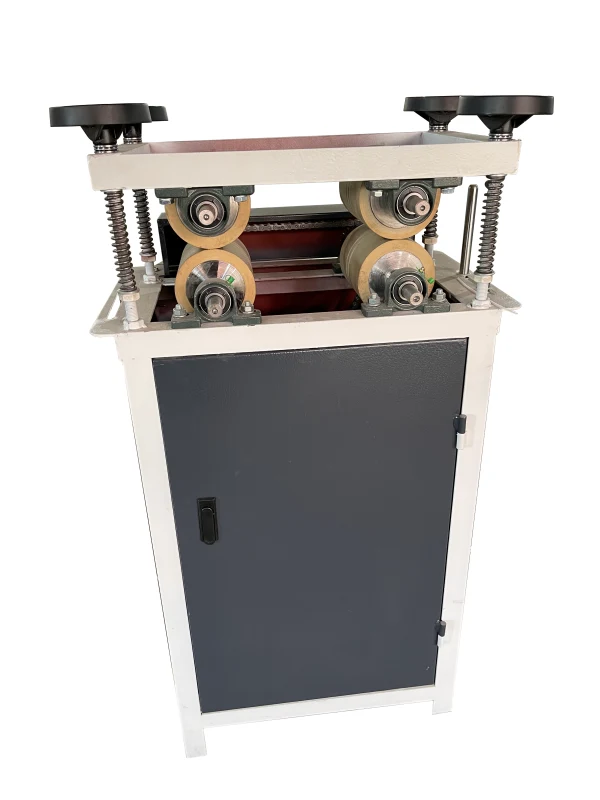
- Standard option: Compact 4-roller pinch haul-off for common rigid dip tubes.
- Upgrade option: Belt-type haul-off for gentler contact and tighter pulling stability.
- Tube protection: Stable surface contact helps reduce thin-wall deformation.
- Synchronization: Haul-off speed is matched with extrusion speed for consistent OD control.
Cutting
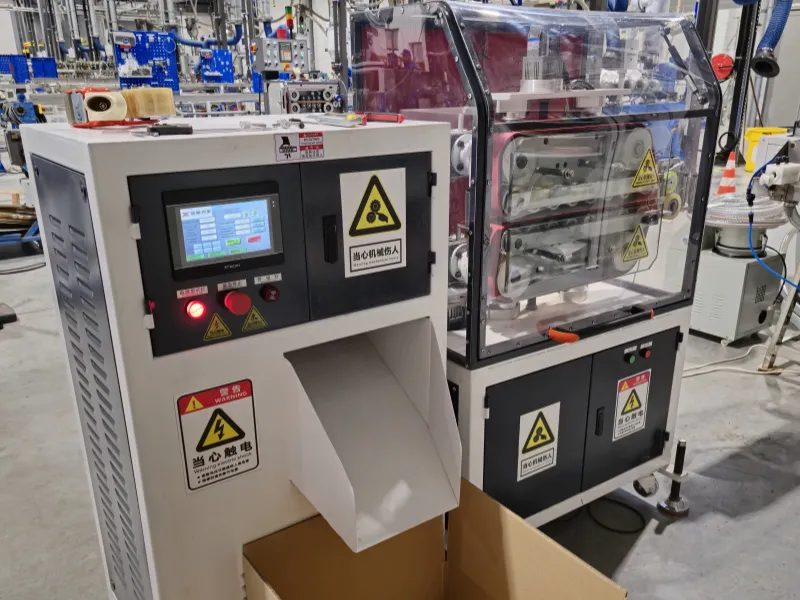
Delta Servo Cutting System
- Drive: Delta servo motor and driver for controlled cutting movement.
- Control: Touchscreen interface for cut length, counting and alarm settings.
- Measurement: Encoder-based length control for repeatable tube cutting.
- Cut profiles: Supports square, V-shape and slanted cuts according to pump or valve requirements.

Collection
Horizontal or Dual-Shaft Winder
- Horizontal option: Suitable for fine or soft tubes that need gentler collection.
- Dual-shaft option: Supports more continuous winding for standard dip tube production.
- Tension control: Magnetic powder clutches help maintain steady winding tension.
- Layering: Traversing unit helps keep tube layers neat on the reel.
- Customization: Reel size and spindle diameter can be matched to the buyer’s packaging flow.

Cooling Support
Industrial Water Chiller
- Type: Self-contained air-cooled or water-cooled unit according to factory conditions.
- Setup: Helps reduce dependence on unstable civil water temperature.
- Reliability: Stable cooling temperature supports tube sizing and continuous production.
Ready to Configure Your Dip Tube Extrusion Line?
Send us your tube size, LDPE or PP material, cut length, cut-end requirement, target application and expected practical output. Jinxin will review the extrusion, sizing, cutting and collection configuration for your dip tube production line.
Use the Quick Contact Sidebar on the right, or the contact options shown on mobile, to send your dip tube requirements.
What Is a Dip Tube Extrusion Line?
A dip tube is the narrow plastic tube inside a pump, sprayer or aerosol valve that reaches down into the liquid container. It is commonly used in lotion pumps, perfume sprayers, aerosol valves and trigger sprayers for cosmetic, personal care and household packaging.
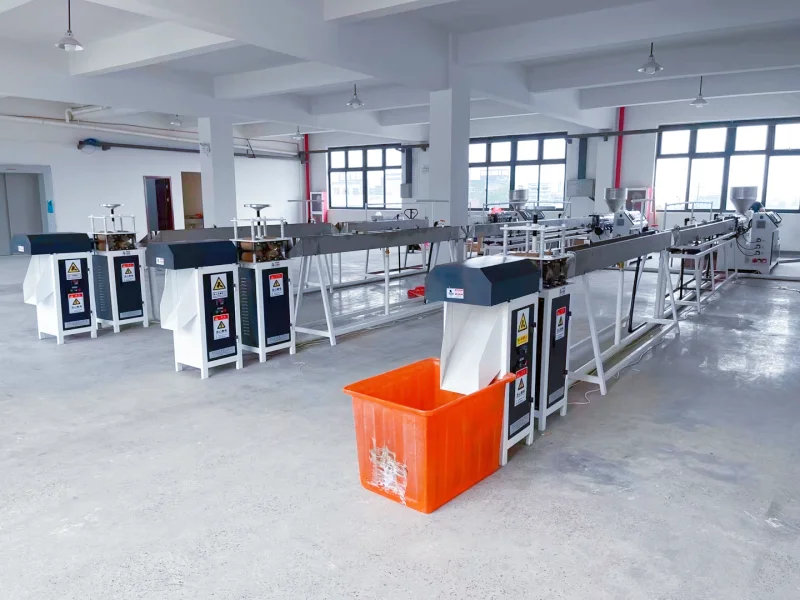
A dip tube extrusion line is the complete production line used to make these LDPE or PP tubes from plastic pellets. The line combines single screw extrusion, die forming, vacuum calibration, air-knife drying, haul-off, servo cutting and winding or collection. For packaging producers, the key production goals are stable OD, uniform wall thickness, clean cut ends and reliable fit inside the pump or valve assembly.
Dip Tube Production Line Applications
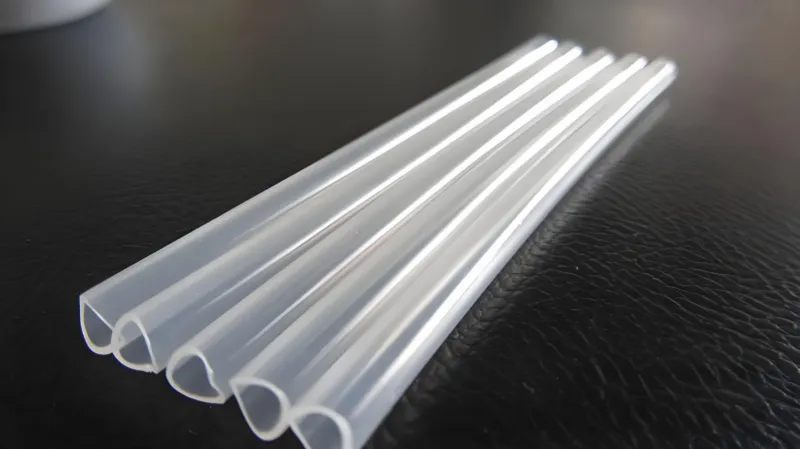
Lotion Pump
Lotion Pump Dip Tube Production
Lotion pump dip tubes need a stable interference fit inside the pump housing to prevent fall-off during automated capping. LDPE is commonly used because it is flexible enough to curve inside the bottle while still holding its shape during insertion.
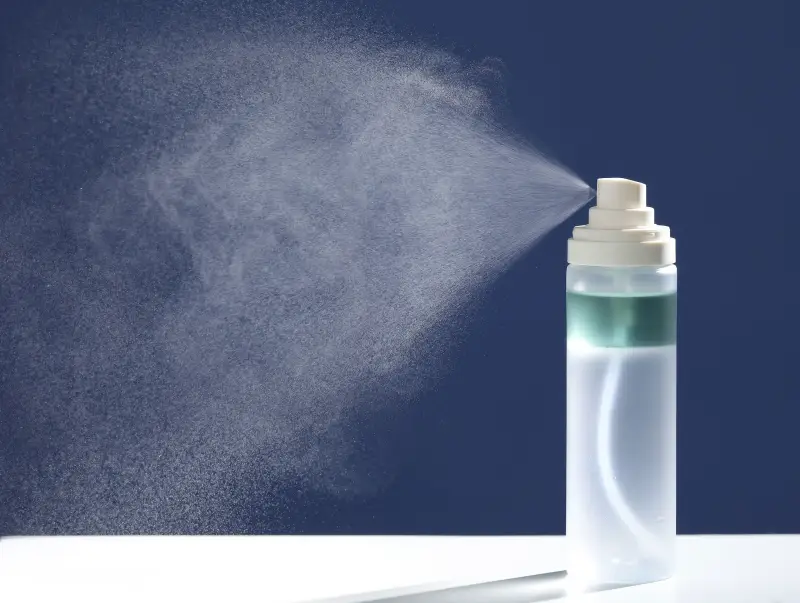
Perfume Pump
Perfume Pump Dip Tube Production
Perfume pump dip tubes are often narrower and thinner-walled, with tighter OD control and cleaner cut ends. V-shape or angled cuts are common when the tube must match a specific fine mist sprayer or valve geometry.
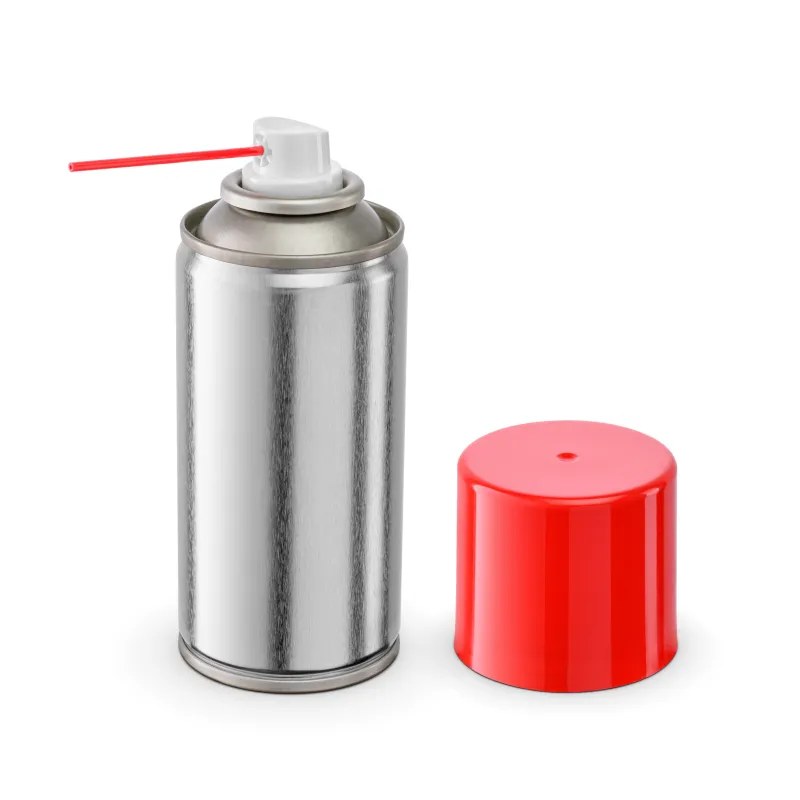
Aerosol Valve
Aerosol Valve Dip Tube Extrusion
Aerosol valve dip tubes require stable roundness and material consistency for pressurized container applications. PP is often selected for its higher stiffness and chemical resistance, while the line must control tube stress and dimensional drift during extrusion.
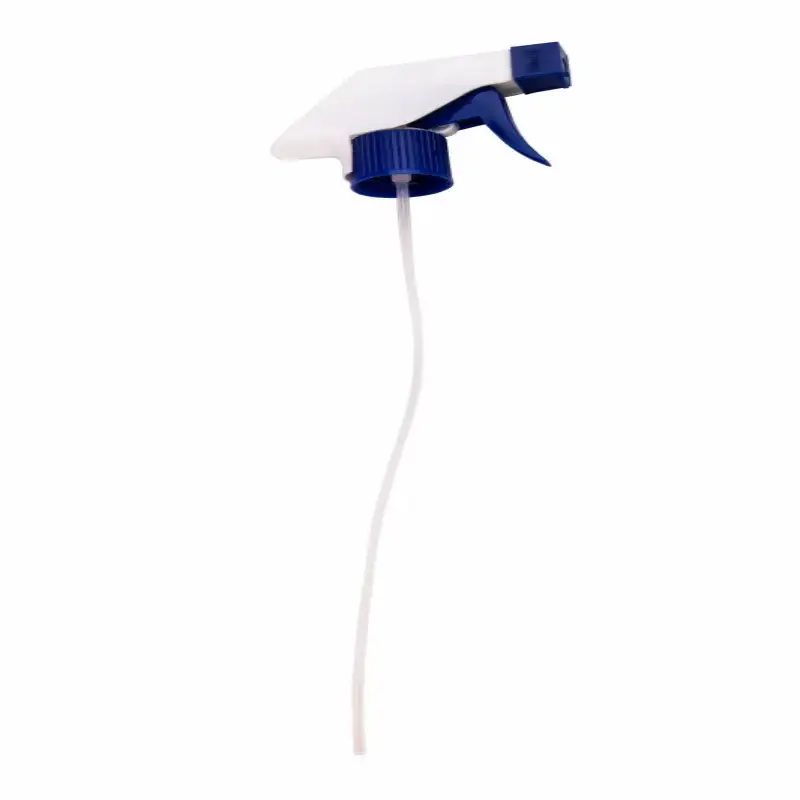
Trigger Sprayer
Trigger Sprayer Dip Tube Production
Trigger sprayer dip tubes for household cleaning and garden-care bottles usually use a larger diameter and a wider tolerance window than cosmetic pump tubes. Stable drying, haul-off and cutting still matter because surface moisture can cause traction slip and inconsistent cut length.
Why Manufacturers & Procurement Leaders Choose Jinxin
Product-Based Factory Testing
Before shipment, we test-run the agreed product type to check die matching and stable product size under real extrusion conditions. After the product runs stably, we record practical startup references such as temperature zones, screw speed, haul-off speed and cutting or winding settings.
- Dimensional Verification: We run the line to prove the mold delivers your exact tube dimensions and tolerances.
- The “Start-Up Recipe”: We record the successful processing parameters (temperatures, speeds) used during the trial. You receive this Data Sheet to skip the guesswork and start production immediately.
- Material Calibration: If your product uses a special compound, we may recommend sending material samples before testing so the startup references are based on the intended material.
Transparent, Line-by-Line Quoting
Your quotation isn’t a vague summary. It is a line-by-line manifest listing every equipment component and brand (e.g., Siemens, ABB), ensuring the hardware matches the promise.
- Detailed Configuration List: Every motor, inverter, tank, and controller is listed by brand and model.
- Clear Service Options: On-site installation and training are quoted as a distinct, transparent line item—no surprise fees later.
- The “Final” Price: No hidden add-ons. What you sign is what you pay.
Global-Service Component Strategy
We strictly implement a “Service-Ready” Component Strategy to ensure your supply chain security.
- Tier 1 Global Giants: For core drives and motors, we use Siemens, ABB, RKC and Omron—available in almost any industrial city worldwide.
- Proven International Brands: For controls and electrics, we select brands like WECON and CHINT, which have established distributor networks across major markets.
- Result: Whether it’s a premium drive or a standard relay, verified quality and convenient maintenance are guaranteed.
Trust Credentials
A majority of our international clients expand their capacity with us — an indicator of long-term reliability.
Our equipment is CE-certified for global market compliance. We also provide Certificate of Origin to help minimize your import duties.
What Our Clients Say
We run extrusion lines from multiple suppliers, but Jinxin’s 360° air-knife was clearly the best moisture-removal design we had seen. We ended up ordering additional air-knife units from them to retrofit onto our existing production lines. It solved a residual-water problem that had been causing cut-quality issues for months.
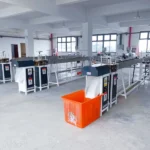
We needed V-cut dip tubes with a specific angle for our perfume pump assembly line. Jinxin built the custom cutter head exactly to our specification, and the cut quality has been consistent from day one. Every tube fits the pump fitting without rework.
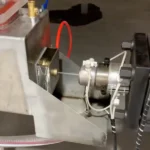
Dip Tube Extrusion Line FAQ
What is a dip tube extrusion line?
A dip tube extrusion line is a complete single screw production system that produces narrow plastic tubes used inside lotion pumps, perfume sprayers, aerosol valves and trigger sprayers. The line takes LDPE or PP pellets through an extruder, shapes the tube through a precision die, locks the diameter via vacuum calibration, strips surface moisture with an air-knife system, pulls the tube at synchronized speed, and cuts it to exact length with servo-controlled cutting, square, V-shape, or angled, depending on the pump design.
Jinxin supplies the dip tube extrusion line, not the finished dip tubes. The line is configured around the buyer’s finished tube sample, material, diameter range, cut profile and collection method.
What is the production process of a dip tube extrusion line?
A typical production process includes: LDPE or PP pellet feeding, single screw extrusion, precision die forming, vacuum calibration for OD control, 360° air-knife moisture removal, synchronized haul-off, servo cutting, either square, V-shape or angled, or winding for bulk collection.
The exact process flow is configured around the finished tube sample, material, diameter range and pump assembly requirements. Jinxin verifies the process with a product-based test run before shipment.
LDPE or PP, which material should a dip tube extrusion line process?
Both are common in dip tube production. LDPE is the standard for lotion pump and cosmetic dip tubes, flexible enough to curve inside the bottle and rigid enough to hold its shape during automated insertion. PP is preferred for aerosol valve dip tubes where higher stiffness and chemical resistance are needed.
The screw geometry, compression ratio and temperature profile are different for each material. Jinxin reviews the buyer’s material target and configures the line accordingly. The line is not a universal system, and material should be confirmed before quotation.
What size range and OD tolerances can a dip tube extrusion line achieve?
The line handles tubing typically in the 3-10 mm OD range, and the exact range depends on die tooling. The leak-proof vacuum calibration system maintains ±0.05 mm OD tolerance with uniform wall thickness across production runs. Jinxin verifies this tolerance during the pre-shipment production trial with the buyer’s specific material.
Can the line produce custom cut ends like V-shape or slanted cuts?
Yes. The servo-driven rotary cutter supports square, V-shape, and slanted, or angled, cuts. However, the line ships with one standard cutting head. The buyer needs to specify the cut profile and V-angle requirements before Jinxin configures the line. Jinxin manufactures and installs the custom cutting head during production, then verifies the cut geometry during the product-based test run using the buyer’s actual material.
How do you ensure the dip tubes will fit valves and pumps without falling off?
The root cause of assembly rejects is dimensional drift during extrusion, not just average OD, but ovality and micro-variations along the tube length. If the OD is even slightly undersized or out-of-round, the tube lacks the interference fit needed to seal inside the pump head. If oversized, it will not insert at all.
Jinxin controls this through two upstream mechanisms, not end-of-line inspection:
- Vacuum Sizing Tank: The leak-proof vacuum system holds the molten tube against the calibration sleeve under stable negative pressure, ensuring roundness and holding OD/ID within ±0.05 mm across the production run.
- 360° Air-Knife Channel: Strips all surface moisture before the tube reaches the haul-off unit. This eliminates micro-slippage in the traction rollers, a common cause of intermittent stretching that creates diameter variation downstream.
The result is a tube that is consistently round and dimensionally stable, so it seats reliably in automated assembly equipment without fall-off or leakage.
What is the difference between a dip tube extrusion line and a dip tube making machine?
Some buyers use the phrase “dip tube making machine,” but it can refer to many different processes, including dip tube cutting machines, assembly equipment, or metal tube bending systems. On this page, Jinxin is referring to a complete dip tube extrusion line, from pellet feeding through extrusion, die forming, vacuum calibration, air-knife drying, haul-off and servo cutting or winding.
Jinxin does not manufacture dip tube cutting machines or dip tube assembly equipment.
What is the lead time, warranty, and packing for ocean freight?
- Lead time: Typical lead time is usually confirmed in the quotation according to line configuration, tooling, electrical setup and test-run requirements. For many standard dip tube line configurations, production including mechanical fabrication, electrical assembly, PLC programming and production trial is commonly in the 50-60 working day range from deposit.
- Warranty: 12 months full-line coverage; HMI touchscreen extended to 18 months. Tier-1 components such as Siemens and ABB carry their own manufacturer warranties.
- Packing: Fumigation-free wooden crates with anti-rust treatment and moisture-proof film. The stainless-steel cooling tank ships separately on a steel pallet due to size.
Send Your Dip Tube Line Requirements
Tell us what kind of dip tube you want to produce, including tube material, OD/ID or wall thickness, cut length, cut-end style, target application and expected practical output.
Use the Quick Contact Sidebar on the right, or the contact options shown on mobile, to send your dip tube extrusion line requirements. Jinxin will review your product details and recommend the extrusion, sizing, cutting and collection configuration.