PVC Braided Hose Extrusion Line for Garden, Washing Machine and Fiber Reinforced Hoses
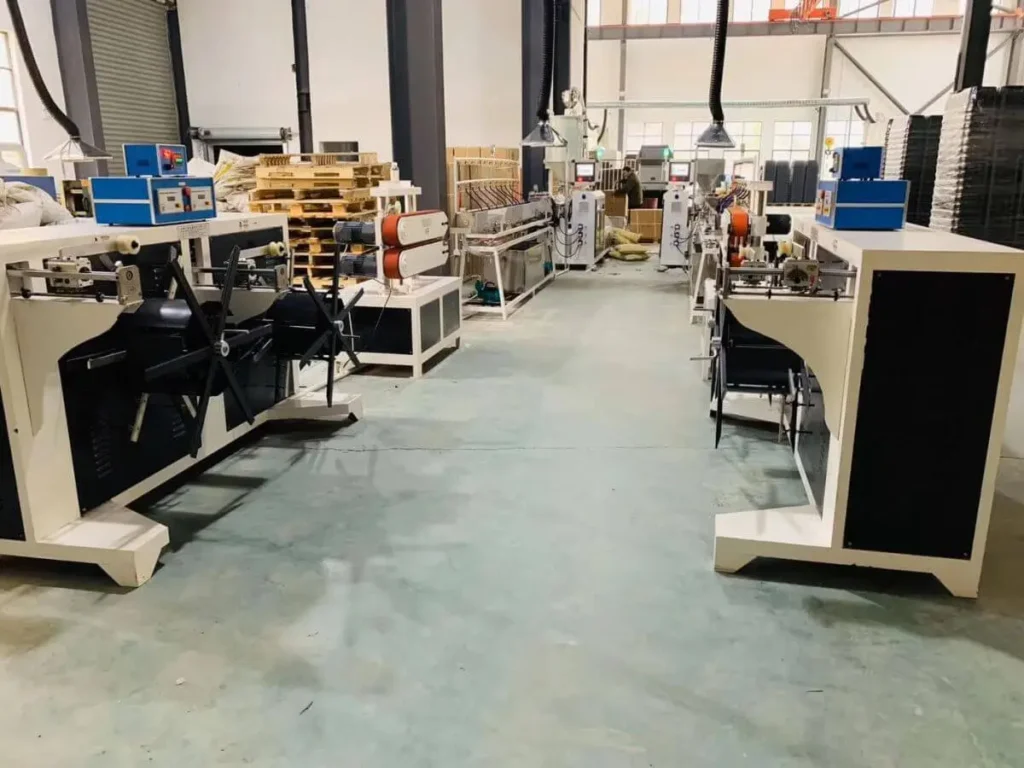
Single screw PVC braided hose extrusion line configured for garden hoses, washing machine inlet hoses and general-purpose fiber reinforced PVC hoses.
Jinxin configures the PVC braided hose extrusion line around your hose diameter, wall thickness, reinforcement yarn, working pressure target and expected output range. The complete production process can include inner PVC extrusion, yarn braiding, outer PVC coating, cooling, haul-off, cutting or winding, with each module matched to the hose structure and factory layout.
How PVC Braided Hose Is Made
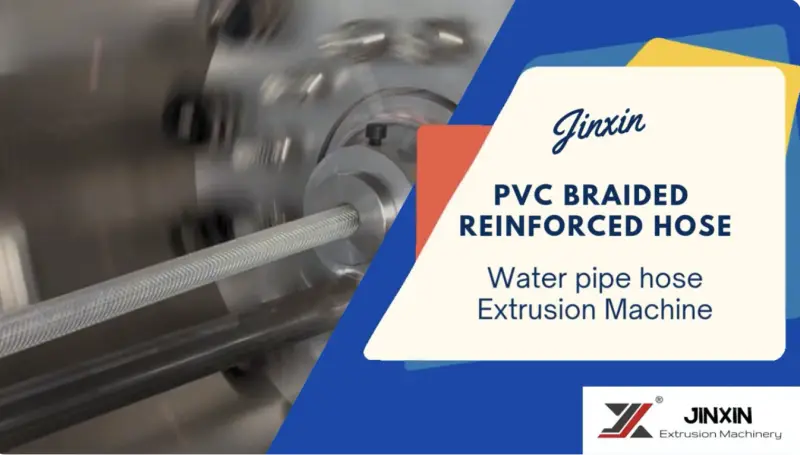
A PVC braided hose is made by extruding an inner PVC tube, braiding reinforcement yarn around it, and coating the braided structure with an outer PVC layer. This creates a flexible reinforced hose with an inner layer, fiber braid and outer protective layer.
On a single screw PVC braided hose extrusion line, these stages are synchronized as a PVC fiber reinforced hose production line rather than handled as separate, disconnected operations.
PVC Compound Feeding
PVC compound is fed into the extrusion system according to the hose formula, color and flexibility requirement.
Inner Tube Extrusion
The first single screw extruder forms the inner PVC tube through a matched die. This step defines the hose inner diameter, initial wall thickness and basic flexibility.
Fiber or Yarn Braiding
Polyester, nylon or other reinforcement yarn is braided around the stabilized inner tube. Braid density and yarn tension affect pressure resistance and hose stability.
Outer PVC Coating
A second extrusion stage applies the outer PVC layer through a crosshead die. The coating covers the braided reinforcement and helps bond the hose structure into one reinforced wall.
Final Cooling and Sizing
The coated hose passes through cooling to stabilize the outer layer and overall diameter. Cooling length and water control are matched to hose size and output speed.
Haul-Off, Cutting or Winding
The finished hose is pulled at synchronized speed and collected by winding or cutting, depending on the delivery format required by the buyer.
The component layout below follows this process flow, from inner PVC extrusion and yarn braiding to outer coating, cooling, haul-off and collection.
Hose Types Produced on This Line
This PVC braided hose extrusion line can be configured for different fiber reinforced PVC hose products by adjusting hose diameter, wall thickness, yarn type, braid density, PVC compound and collection method. Typical applications include garden hoses, washing machine inlet hoses, water delivery hoses, light-duty industrial hoses and transparent or colored braided hoses.

Hose Type 01
Fiber Reinforced PVC Hose
General-purpose fiber reinforced PVC hose with an inner PVC layer, braided yarn reinforcement and outer PVC coating. Suitable for water transfer, household use and light-duty industrial applications where flexibility and pressure resistance are required.

Hose Type 02
Three-Layer Braided Hose Structure
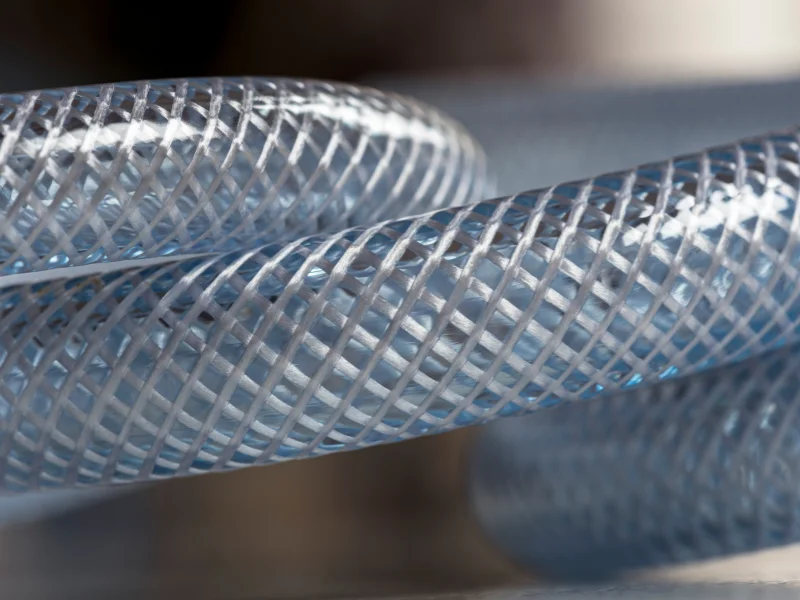
The line can produce reinforced hose structures with an inner tube, fiber braid and outer protective layer. This structure helps improve pressure resistance, kink control and dimensional stability compared with non-reinforced PVC hose.

Hose Type 03
PVC Garden Hose
PVC garden hoses can be produced in transparent, colored or striped designs depending on the PVC compound and outer layer configuration. Hose size, wall thickness and braid structure are selected according to the working pressure and market requirement.
Hose Type 04
Washing Machine Inlet and Water Hose
For washing machine inlet hoses and general water hoses, the line can be configured for stable diameter, clean outer surface, reinforced wall structure and organized winding or cutting. Material formula and hose dimensions are matched to the buyer’s product standard.

Hose Type 05
Light-Duty Industrial Reinforced Hose
Three-layer reinforced PVC hoses can be configured for workshop water, air transfer and light-duty industrial use. The line setup depends on hose size, yarn reinforcement, pressure target, flexibility requirement and collection method.
PVC Fiber Reinforced Hose Extrusion Line: Core Modules
Each module works as part of a synchronized PVC braided hose production line, from PVC compound feeding and inner tube extrusion to yarn braiding, outer coating, cooling, haul-off and final collection.

Core Extrusion System
SJ Series PVC Extruders for Multi-Layer Hose Production
- Core Drive & Control: Siemens Beide motor with ABB inverter, controlled by WECON PLC and touchscreen for coordinated speed and temperature operation.
- Screw & Barrel: PVC-specific screw with nitrided treatment and hard chrome plating for wear resistance and stable melt quality.
- Heating Control: Heating zones controlled by FOTEK solid-state relays for stable temperature management.
- Multi-Extruder Configuration: The line can be configured with multiple SJ series extruders, with each extrusion stage applied to a specific PVC layer for fiber reinforced hose production.

Cooling & Sizing
Precision Water Cooling and Sizing Tank
- Tank Structure: Stainless steel tank body with integrated water circulation pump.
- Adjustability: Manual 3D adjustment for front/back, left/right and up/down alignment between die and tank.
- Sizing Logic: Cooling and sizing are configured to support stable ID/OD control; vacuum sizing can be applied for soft compounds or thin-wall hose where required.
- Hose Format Support: Tank length and cooling intensity are matched to target hose diameter, wall thickness and output speed.

Reinforcement System
High-Speed Yarn Braiding Unit
- Build Quality: Stainless steel protective cover helps reduce airflow disturbance for steadier yarn routing.
- Tension Management: Mechanical tension adjustment supports more uniform yarn wrapping.
- Drive System: Dual-motor structure with ABB 580 series inverter control.
- Control Integration: Braiding speed can be matched through the main PLC touchscreen.
- Application Range: Supports PVC yarn braided hose production for garden hose, water hose and light-duty industrial reinforced hose, with project configuration according to hose ID and pressure target.

Downstream Stability
Dual-Motor Multi-Belt Haul-Off Unit
- Pulling Stability: Multi-belt contact with adjustable pressure helps reduce deformation on soft reinforced hose.
- Operation: Speed parameters are controlled through the main PLC touchscreen.
- Design: Belt layout is selected for reinforced PVC hose handling and stable pulling after coating and cooling.

Precision Cutting
Project-Configured Cutting System
- Drive System: Servo-driven cutting can be configured for stable cutting at production speed.
- Control: PLC-based control with operator-friendly length and cutting settings.
- Integration: Can be integrated with downstream conveying, counting or stacking functions according to the delivery format.

Final Collection
Winding / Coiling Unit
- Tension Control: Tension-controlled winding option supports neat coils and consistent packaging.
- Level Wind: Level-wind option helps distribute hose evenly across the spool.
- Length Management: Meter counting and alarm options can be configured for roll-length management.
Output Stability and Surface Quality in PVC Braided Hose Production
Jinxin focuses on practical controls that affect reinforced PVC hose quality during continuous extrusion, braiding, coating and collection.
Quality Control 01
Smooth-Touch Surface
Standard braided hoses can show or feel the yarn pattern if the outer layer is too thin or poorly distributed. Jinxin adjusts die tooling and layer wall distribution while keeping the specified ID/OD, so the yarn is properly covered and the hose surface feels smoother by touch.
Quality Control 02
Material and Hardness Guidance
PVC compound mismatch, especially Shore hardness, is a common cause of unstable extrusion, poor flexibility or weak pressure performance. Jinxin reviews the hose application and pressure requirement, then provides material and hardness direction for the line configuration.
Quality Control 03
Downstream Handling
Coordinated haul-off, cutting and winding tension help prevent unnecessary stretching, flattening or deformation during the final stages of production. This supports more stable coil quality and cleaner delivery after the reinforced hose leaves the cooling section.
Ready to Configure Your PVC Braided Hose Extrusion Line?
Tell us how many layers your target hose has and the thickness of each layer — each layer requires its own die tooling set and extruder, so this determines the line configuration and quotation scope. Also include hose diameter, working pressure, material and expected output if available. If you are not sure about the layer structure, send a hose sample or cross-section photo and Jinxin will review it with you.
Use the Quick Contact Sidebar on the right, or the contact options shown on mobile, to send your PVC braided hose requirements.
Factory Testing and Startup References
Before shipment, Jinxin test-runs the agreed hose type under real extrusion conditions. The test is product-specific, not a generic equipment check, because PVC braided hose quality depends on layer thickness, braid coverage, cooling, haul-off and winding coordination.
Testing Step 01
Layer-by-Layer Die Check
Each PVC layer has its own die tooling set. During the test run, the inner diameter, layer wall thickness and outer diameter are checked against the target specification. If a dimension needs correction, the die is adjusted and the hose is run again for confirmation.
Testing Step 02
Outer Coating and Braid Coverage
The finished hose is checked to confirm that the outer PVC layer properly covers the yarn reinforcement. Surface feel and visual inspection help confirm whether the braid pattern is controlled and whether exposed fiber or uneven coating appears.
Testing Step 03
Startup Parameter Recording
After the hose runs stably, practical startup references are recorded, including temperature zones, screw speed, braiding speed, haul-off speed, cooling settings and winding or cutting settings. These references give the buyer a tested baseline for first startup at the factory.
Testing Step 04
Material Sample Note
If the hose requires a special or modified PVC compound, Jinxin recommends sending actual material samples before factory testing. This helps make the startup references closer to the buyer’s real production material.
Trust Credentials
A majority of our international clients expand their capacity with us — an indicator of long-term reliability.
Our equipment is CE-certified for global market compliance. We also provide Certificate of Origin to help minimize your import duties.
What Our Clients Say
Our washing machine inlet hoses need to meet pressure and dimensional requirements for appliance customers. The PVC braided hose extrusion line Jinxin configured helped us pass acceptance on the first submission.

With our previous line, we could feel the yarn pattern through the outer layer. Jinxin adjusted the die tooling and layer distribution so the hose surface became much smoother. We also compound our own PVC pellets in-house, and they tested the line with our material before shipping.
Frequently Asked Questions About PVC Braided Hose Extrusion Lines
What is a PVC braided hose extrusion line?
A PVC braided hose extrusion line is a production line used to make fiber reinforced PVC hose with an inner PVC tube, braided yarn reinforcement and outer PVC coating. It normally includes PVC extrusion, cooling, yarn braiding, outer coating, final cooling, haul-off and winding or cutting.
How is PVC braided hose made?
PVC braided hose is made by first extruding the inner PVC tube, then braiding polyester, nylon or other reinforcement yarn around the tube, and finally applying an outer PVC layer through a single screw extrusion stage and crosshead die. The finished hose is then cooled, pulled and collected by winding or cutting.
What products can this PVC braided hose extrusion line produce?
The line can produce garden hoses, washing machine inlet hoses, water hoses, transparent braided PVC hoses, colored reinforced hoses and light-duty industrial hoses. Hose diameter, wall thickness, yarn type, braid density and PVC compound are configured according to the target product.
What is the difference between a PVC braided hose extrusion line and a hose braiding machine?
A hose braiding machine only applies yarn reinforcement around an existing tube. A PVC braided hose extrusion line is a complete production system that includes inner tube extrusion, braiding, outer PVC coating, cooling, haul-off and final collection. Jinxin supplies complete PVC braided hose extrusion lines, not standalone hose braiding machines.
Can this line produce both garden hose and washing machine inlet hose?
Yes. The same PVC braided hose production line can often be configured for garden hose, washing machine inlet hose and general-purpose reinforced water hose. The key differences are hose size, wall thickness, PVC formula, reinforcement yarn, braid density, pressure target and collection method.
What materials are used to make PVC braided hose?
PVC braided hose usually uses flexible PVC compound for the inner and outer layers, with polyester yarn, nylon yarn or other fiber reinforcement between the layers. The exact formula depends on flexibility, transparency, color, pressure requirement and the buyer’s application standard.
What temperature is used for PVC braided hose extrusion?
PVC extrusion temperatures are set according to the compound formula, stabilizer system, screw design and output requirement. The final setting should follow the material supplier’s processing guidance and factory test-run results. During testing, Jinxin records practical startup references such as temperature zones, screw speed and haul-off speed.
How much pressure can a PVC braided hose handle?
Pressure capacity depends on hose diameter, wall thickness, yarn material, braid density, layer bonding and PVC compound. Jinxin does not define pressure by the line alone; the production line is configured around the buyer’s target working pressure and product standard.
Is braided PVC hose food safe?
Food safety depends on the PVC compound and additives, not only on the extrusion line. If the hose is intended for food-contact or drinking-water use, the buyer should select compliant material and provide the required standard so the line can be configured for the material and product requirement.
What information should I provide before requesting a quotation?
Please share hose ID/OD, wall thickness, hose type, target working pressure, yarn material, braid structure, PVC compound or hardness, color or transparency requirement, expected output range, cutting or winding method and factory voltage/layout. A hose sample or drawing helps Jinxin review the configuration more accurately.
Send Your PVC Braided Hose Line Requirements
Use the form on this page to tell us what kind of PVC braided hose you want to produce. A photo, sample or simple description is enough to start the discussion.
If available, you can also include:
- Hose ID/OD, wall thickness and layer structure
- Working pressure and target application
- Yarn material and braid density preference
- PVC compound or expected hardness
- Color or transparency requirement
- Cutting or winding preference
- Expected production capacity
- Factory voltage or installation country
Do not worry if you are not sure about every detail. We will review your message and let you know what information is needed for the next step.