Что такое экструдерная машина? Принцип работы, типы и основные компоненты
Написано технической командой Jinxin | Проверено Джейсоном (главным инженером)
Если вы ищете что такое экструдерная машина, Скорее всего, вы хотите понять, как устроено оборудование для непрерывного производства пластмасс (и многих других материалов). Если говорить простым языком, то экструдерная машина Берет сырье, подает его вперед, подвергает нагреву и сдвигу, чтобы сформировать пригодный для обработки расплав (или мягкую массу), а затем продавливает его через формующий штамп для создания непрерывного продукта.
Примечание: Хотя экструдеры используются в пищевой и металлургической промышленности, в данном руководстве особое внимание уделяется пластиковые экструдеры-основа современной полимерной промышленности, используемая для производства труб, профилей, листов и пленок.

Теперь, когда мы определили, что такое экструдерная машина, давайте углубимся в принцип работы и ключевые факторы, влияющие на стабильность выхода, качество расплава и консистенцию конечного продукта.
Основной процесс: Как работает экструдер?
Чувствуя, что простые объяснения этого экструзионное оборудование упускать критические детали? Подробный взгляд на процесс экструзии раскрывает сложные инженерные решения внутри экструдерная машина.
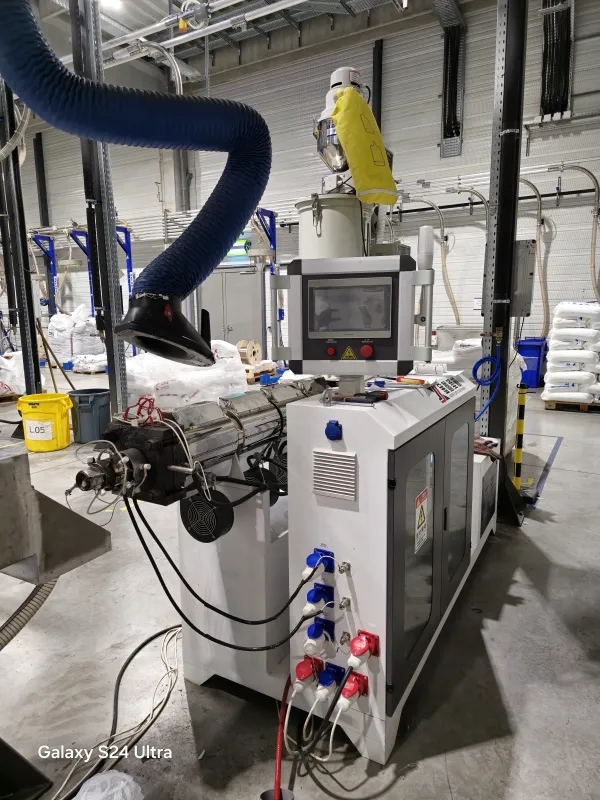
В сущности экструдерная машина тщательно контролирует превращение твердого сырья в точно сформированный расплавленный поток. Это достигается благодаря синергетическому сочетанию транспортировки, нагрева, смешивания, давления и формования в рамках основных компонентов.

Принцип работы: 5 основных этапов экструзии
Чтобы в полной мере оценить функции экструдерная машина, Но мы не должны ограничиваться простым определением. Процесс - это тщательно организованная последовательность действий, определяющая достижимое качество продукта.
1. Точный ввод материала (бункер и загрузочная горловина):
Путешествие начинается с бункера. Последовательная и точная подача исходного пластика (гранул, гранул или порошка) в экструдерная машина имеет основополагающее значение. Конструкция загрузочной горловины, иногда охлаждаемой, обеспечивает устойчивое поступление материала в каналы шнека без преждевременного расплавления или образования мостиков.
2. Шнек - истинное сердце экструдера:
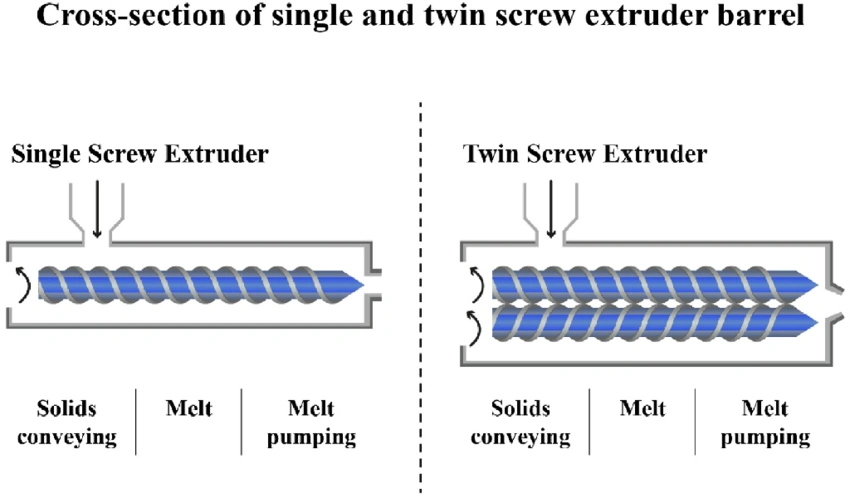
Шнек экструдера - это не просто простой конвейер; его сложная геометрия тщательно продумана. Понимание различных зон шнека имеет решающее значение:
- Зона подачи (транспортировка твердых частиц): Переносит твердые пластиковые частицы и уплотняет их.
- Переходная зона (таяние): Сжимает и плавит материал с помощью сдвига и бочковых нагревателей.
- Зона дозирования (перекачка): Гомогенизирует расплав и создает давление в фильере.

3. Бочка - больше, чем просто контейнер:
Бочка работает в тандеме со шнеком. Это не просто пассивный корпус, а прочный сосуд с независимо управляемыми зонами нагрева для создания точного температурного градиента.
4. Создание давления и формирование штампа:
Когда расплавленный пластик достигает конца шнека, создается значительное давление, чтобы протолкнуть вязкий расплав через фильеру. Конструкция фильеры определяет конечную форму (труба, профиль, лист).
5. Контролируемое охлаждение и последующая обработка:
Функция экструдерная машина не заканчивается на выходе из фильеры. Экструдат необходимо охлаждать (водяные ванны, воздушные ножи) и вытягивать с постоянной скоростью для сохранения размеров.
| Стадия внутреннего процесса | Основные действия экструдера | Критические факторы |
| Бункер и загрузочная горловина | Потребление материала | Форма материала, сушка, консистенция корма |
| Винтовые зоны | Транспортировка, плавление, перекачка | Конструкция шнека (отношение L/D), степень сжатия |
| Функция ствола | Тепловой контроль | Точность температурного профиля |
| Штамповка и переработка | Формирование и застывание | Конструкция фильеры, скорость охлаждения, скорость транспортировки |
Типы экструдеров: Одношнековые и двухшнековые
Хотя одношнековые и двухшнековые экструдеры охватывают большинство областей применения пластмасс, понимание их различий является ключом к выбору правильной экструзионной машины.
| Тип экструзионного оборудования | Ключевая определяющая черта(и) | Основная область(и) применения | Типичные материалы |
|---|---|---|---|
| Одновинтовой Экструдер для пластмасс | Один вращающийся винт | Трубы, профили, пленки, листы общего назначения | Большинство термопластов (ПЭ, ПП, ПВХ, ПС) |
| Двухвинтовой Экструдер для пластмасс | Два взаимозаменяемых винта (совместное или встречное вращение) | Компаундирование, смешивание, реактивная экструзия, сложные материалы | Порошок ПВХ, наполненные пластики, смеси |
| Рам Экструдер для пластмасс | Плунжер толкает заготовку материала | Материалы, трудно поддающиеся шнековой экструзии | PTFE, UHMWPE |
| Мультивинт Экструдер для пластмасс | Более двух шнеков для интенсивного перемешивания | Специализированные компаунды, термочувствительные материалы | ПВХ, с высоким содержанием наполнителя |
| Система совместной экструзии (несколько единиц) | Несколько экструдеров подают материал в одну фильеру | Многослойные пленки, трубы, профили с отдельными слоями | Различные, в зависимости от потребностей слоя |
Такие отраслевые издания, как Технология пластмасс регулярно освещают достижения в области экструзионных технологий.
Критический фактор выбора: Гранулы или порошок?
В компании Jinxin мы часто сталкиваемся с тем, что клиенты запрашивают цену на “машину для производства труб из ПВХ”, не понимая, что форма их сырья диктует тип машины. Многие полагают, что подойдет любой экструдер, но первый вопрос, который всегда задают наши инженеры, - это: “Вы используете гранулы или порошок?”
- Одношнековый экструдер (для гранул):
Одношнековые экструдеры Jinxin разработаны специально для производства гранул (пеллет). Если вы используете предварительно компаундированные гранулы ПВХ (или гранулы ПЭ/ПП), наши одношнековые машины - самый эффективный и экономичный выбор для вашего производства.
- Двухшнековый экструдер (для порошка):
Если вы используете Порошок ПВХ (сухая смесь), Вам, как правило, требуется Двухшнековый экструдер. Стандартная одношнековая машина не может создать высокий сдвиг, необходимый для прямого смешивания и пластификации порошка. Если у вас есть порошок, вы должны использовать двухшнековую машину (или сначала гранулировать порошок).
Совет Цзиньсинь: Мы спрашиваем об этом заранее, чтобы вы не тратили время на изучение неподходящего оборудования. Если у вас есть гранулы, наши одношнековые линии идеально подойдут.
Подробное сравнение см. Руководство по одинарному и двойному винту.
Общие области применения: Что могут создавать экструдеры для пластмасс?
Экструдеры для производства пластмасс невероятно универсальны. Вот наиболее распространенные варианты применения:
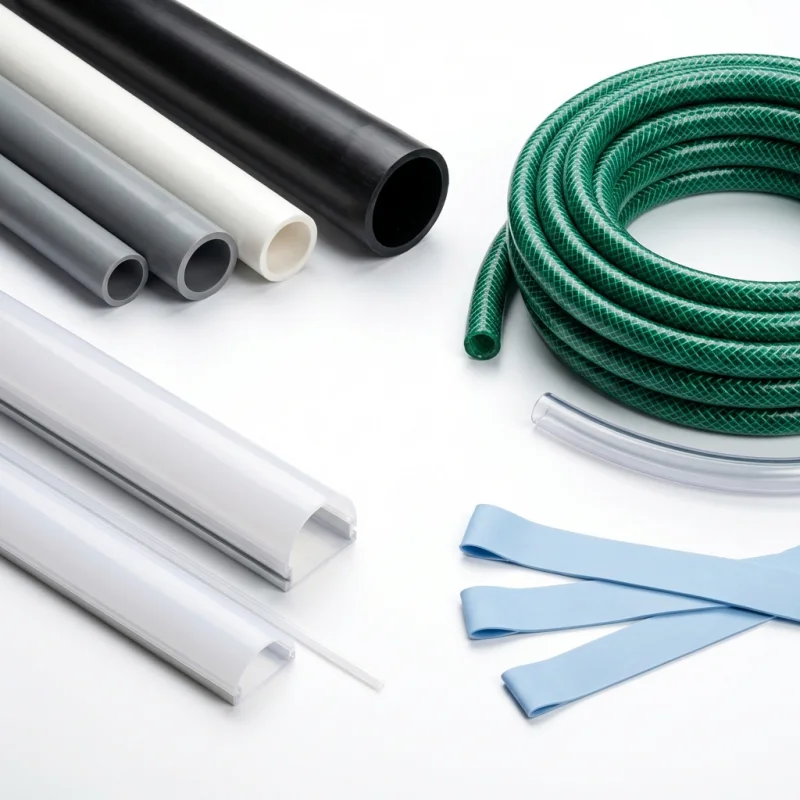
- Трубы и трубки: Водопроводные трубы, газовые трубы, медицинские трубки.
- Профили: Оконные рамы, дверные уплотнители, плафоны светодиодных ламп.
- Листы: Упаковка, термоформовочные листы.
- Специальность: Резинки из TPE, нити для 3D-принтеров.
Выбор подходящей экструдерной машины: Контрольный список покупателя
Чтобы убедиться, что вы купили правильный экструдерная машина, При обращении к производителям, таким как Jinxin, подготовьте следующие спецификации:
- Материал: Какой пластик вы используете? (например, гранулы ПНД, порошок ПВХ, гранулы ПВХ, гранулы ПВД)
- Продукт: Какова окончательная форма и размер? (например, наружный диаметр трубы 110 мм, чертеж профиля)
- Выход: Сколько кг/час вам нужно?
- Применение: Это для новой линии или для модернизации старой?
Обслуживание и эксплуатация
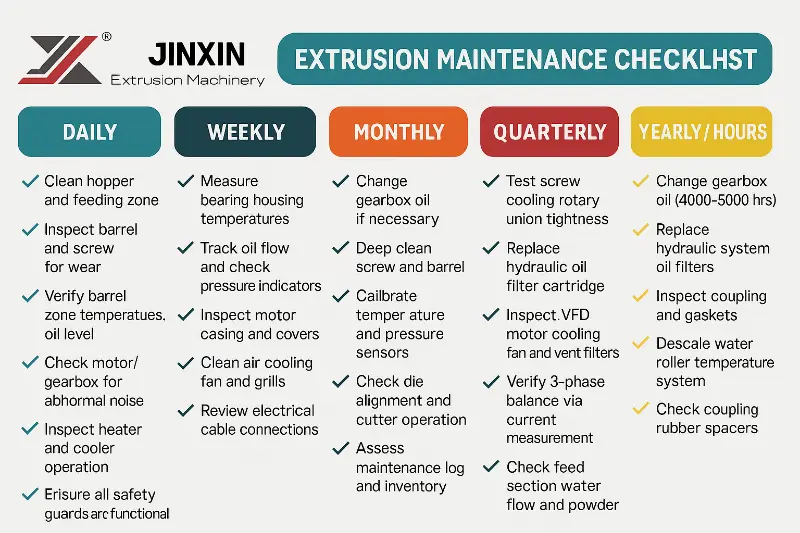
Регулярное техническое обслуживание обеспечивает экструдерная машина Эффективно работает в течение многих лет.
- Регулярно проверяйте шнек и ствол на предмет износа.
- Контроль уровня и температуры трансмиссионного масла.
- Калибровка нагревательных лент и термопар.
Что такое экструдерная машина? Часто задаваемые и распространенные вопросы
Вот краткие ответы на распространенные вопросы о том, что такое экструдерная машина.
Заключение
Понимание что такое экструдерная машина это первый шаг к освоению производства пластмасс. Независимо от того, нужна ли вам простая одношнековая установка для производства полиэтиленовых труб или сложная двухшнековая система для компаундирования ПВХ, правильное оборудование определяет ваш успех.
На сайте Jinxin пластиковые машины, Мы специализируемся на высокопроизводительных пластиковые экструдеры с учетом ваших производственных целей.
Однако сам по себе экструдер не определяет стабильность конечного продукта. Он создает расплав, но не фиксирует размеры, не контролирует последующее формование и не обеспечивает стабильность производства в течение долгого времени. Эти результаты зависят от того, как экструдер интегрирован с остальными компонентами системы.
Чтобы понять, как работает полная производственная система - от подачи материала до охлаждения, транспортировки и доставки готовой продукции - см. [→ Что такое экструзионная линия для производства пластмасс? ].
Готовы начать? Свяжитесь с Цзиньсинь сегодня Сообщите нам технические характеристики вашей продукции, и мы поможем вам создать идеальную экструзионную линию.
Изучить темы
Фильтр по характеристикам
ABS (1) Послепродажная поддержка (1) Черные пятна (2) Экструзионные фильеры (1) проблемы с кормлением (1) Намерение: Основы (10) Намерение: Контроль (3) Намерение: Техническое обслуживание (6) PA (1) ПК (1) PE (1) ПММА (1) PP (1) покупка (1) ПВХ (1) Устранение неполадок (5) изменение толщины стенки (2)
У вас есть технические вопросы?
Наша команда инженеров готова помочь вам с выбором процесса экструзии или конфигурации машины.
Джейсон Шен
Джейсон - основатель компании Jinxin Extruder и инженер-ветеран с более чем 20-летним практическим опытом работы с пластиковым оборудованием.
Начав свою карьеру в цеху, он освоил все технические детали - от электропроводки до устранения сложных неисправностей.
Сегодня он лично контролирует окончательные проверки, гарантируя, что каждая машина создана с учетом глубоких технических знаний и проверенной на практике надежности.
Дальнейшее чтение
Котировка экструзионной линии: Что входит в комплект и что нужно проверить перед покупкой
Сравниваете расценки на экструзионные линии? Воспользуйтесь этим контрольным перечнем объемов поставок, чтобы узнать, что в них входит, что обычно исключается, и...Экструзионный ситоизмельчитель и фильтрация расплава: Как уменьшить загрязнение и колебания давления
Практическое руководство по устройствам смены сит в экструзии пластмасс - как фильтрация расплава контролирует загрязнение, почему смена сит вызывает давление...